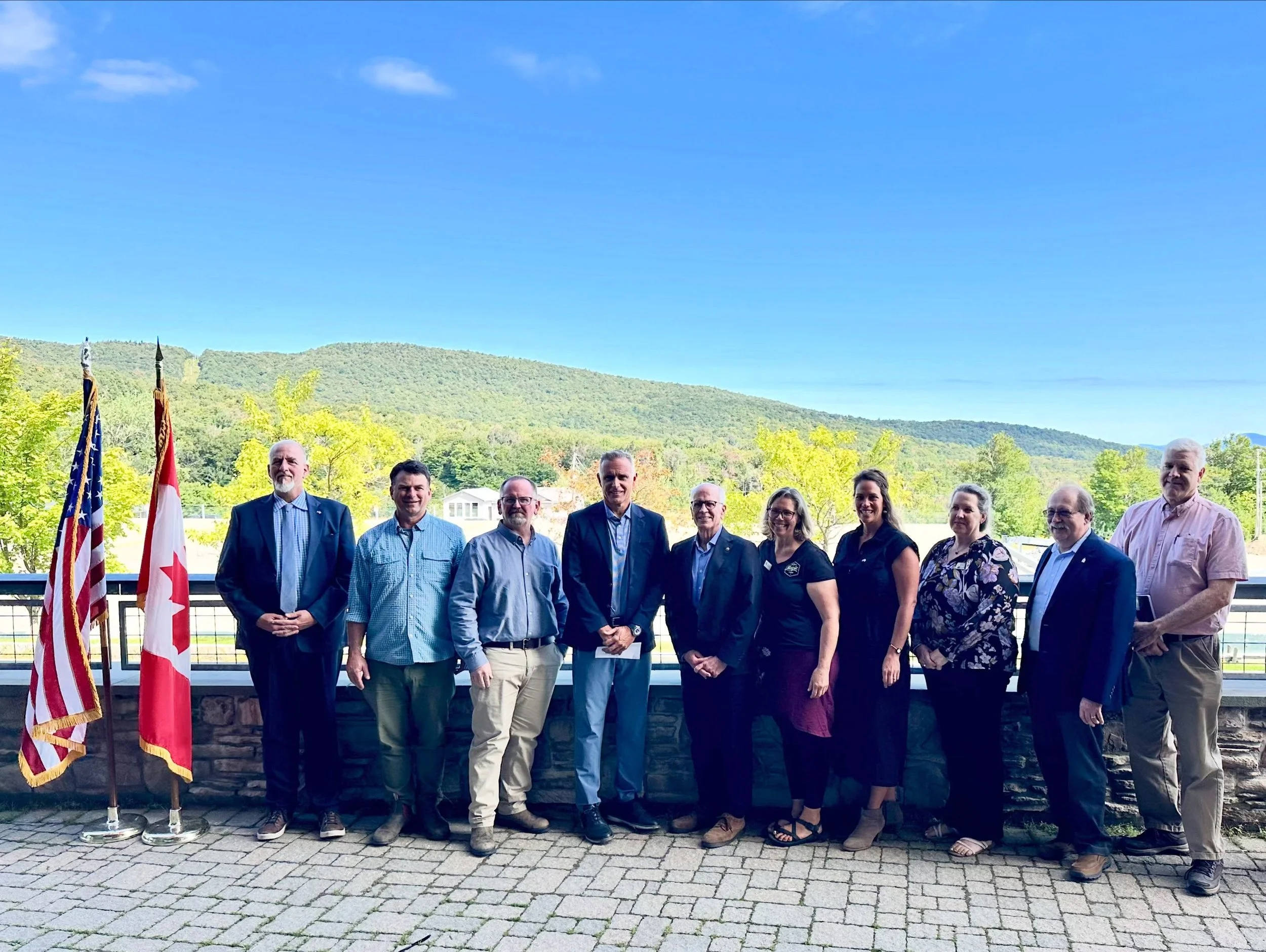
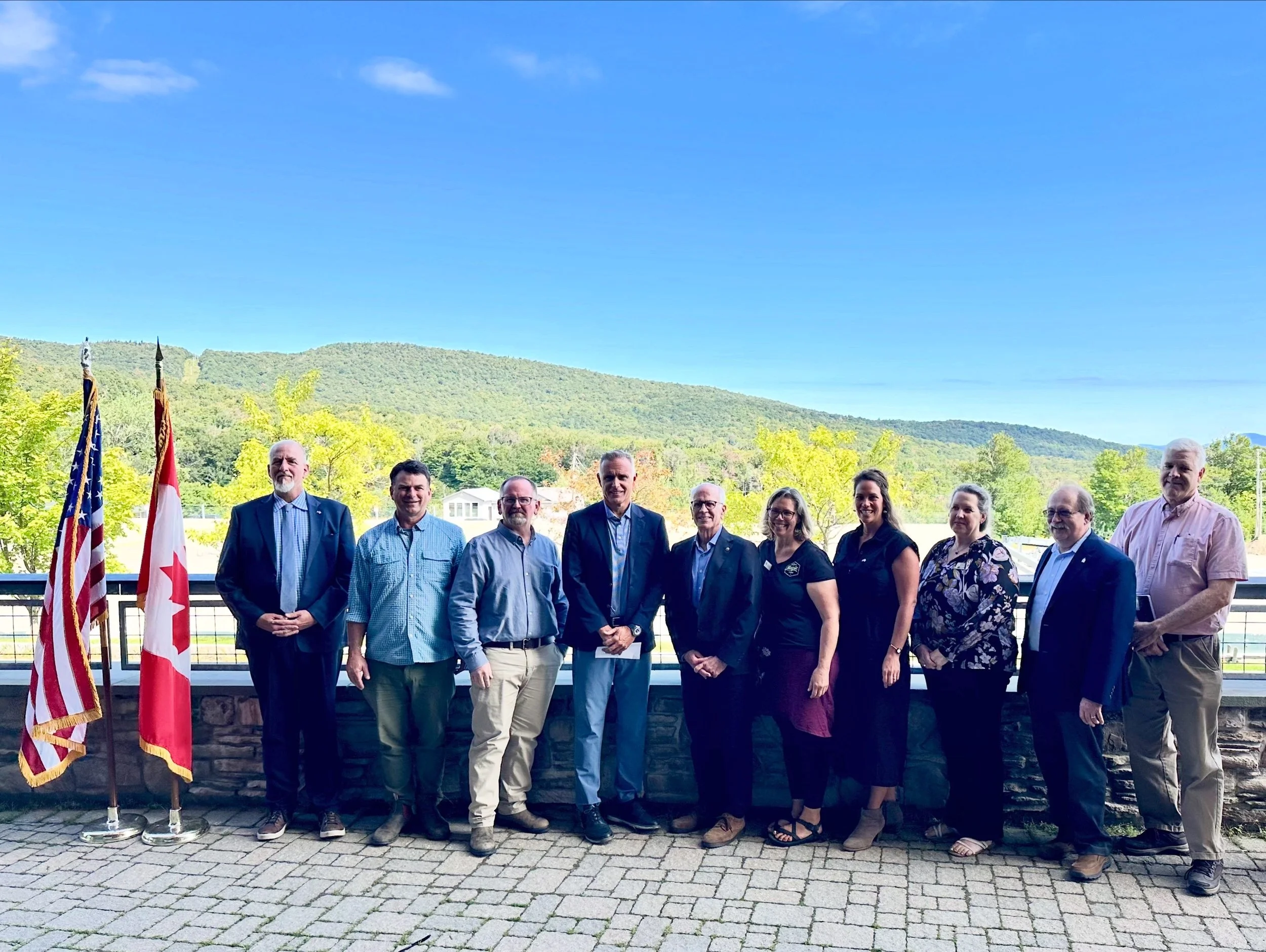
Regional Roundtable on Tariff Impacts
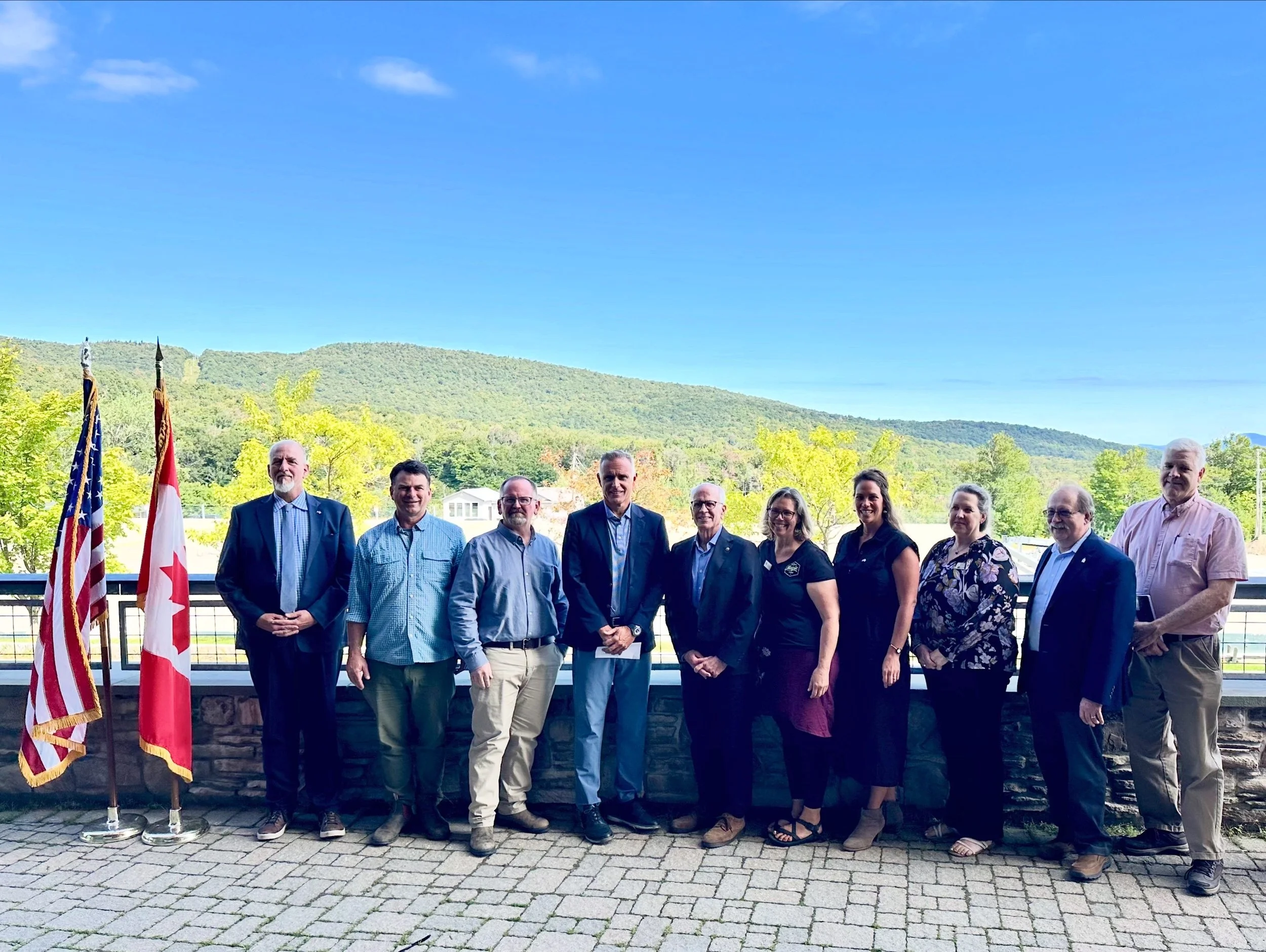
Abby Long's, NEK Collaborative Executive Director, sharing on impacts to the region and forest economy.
The Northeast Kingdom Collaborative's role, as we hold the agreement with USDA Rural Development for the region's REAP Zone designation (Rural Economic Area Partnership), is to communicate with the federal government and all levels of decision makers what the Northeast Kingdom’s priorities are; our needs, our challenges.
For the Northeast Kingdom, our relationship with Canada is woven into the fabric of our region, it is part of our everyday economy and our communities. We share roads, trails, libraries, markets, customers, workers, natural resources, friendships, and families. For many Kingdom businesses, Canada is not simply an international trading partner. They’re our neighbors. That interconnectedness means tariffs on either side of the border do not stop at the border. They ripple through our region.
That connection is especially clear in our forest economy, one of the Northeast Kingdom’s vital sectors. Our forest products cross the border, sometimes multiple times. Logs, lumber, pulp, wood chips, panels, and more move between Vermont and Canada as part of supply chains that have been deeply developed. Canada is Vermont’s largest export market for hardwood and sawlogs; over 50% of Vermont’s lumber goes to Canada. Vermont lacks the milling capacity to meet its own demand for softwood lumber, so we rely heavily on Quebec mills. It gets sawed and processed before it comes right back into Vermont. We imported $52M in sawmill and wood products from Canada in 2024.
Here in the Northeast Kingdom, the impacts of these tariffs are coming at a particularly challenging time. Our forest products sector was already facing significant headwinds as 3 Vermont mills have closed since 2023 (Putney, A Johnson, and MiIl River), plus the recent Finch Paper mill in NY just the other week. With limited processing capacity, causing changing markets, plus fuel costs we are seeing loggers reconsider whether they can remain in the industry. Without those to manage our forests, landowners lose the income that helps keep forests working and whole, storing carbon. Forests could be subdivided, sold, and developed which then places our climate even more at risk. Climate resilience is a top priority for the region.
And the impacts of tariffs extend beyond the woods. Higher costs for building materials can make housing even more of a challenge then it already is. Housing is the most urgent and unifying priority for the NEK. Softwoods are used for framing and walls in new construction while hardwoods like maple and oak are finishing material for floors or cabinets. If tariffs increase the cost of Canadian building materials, those costs will ultimately reach builders, developers, and then consumers. An increase in material costs on a new single-family home could make an already marginal housing project financially unfeasible in a rural NEK community.
Yes, the Kingdom and Canada share an economy, but more importantly a sense of community built over generations, and these tariffs won’t put an end to that. Please know we will keep maintaining and building relationships and working together across the border. To quote Dolly Parton, “Storms make trees take deeper roots.”